Dear writers,
Connecting with confidence can be difficult when we’ve been trained so thoroughly and effectively to look for external validation for our creative choices.
The best advice I ever got around this concept came from George Saunders, when he talked about the concept of the internal meter.
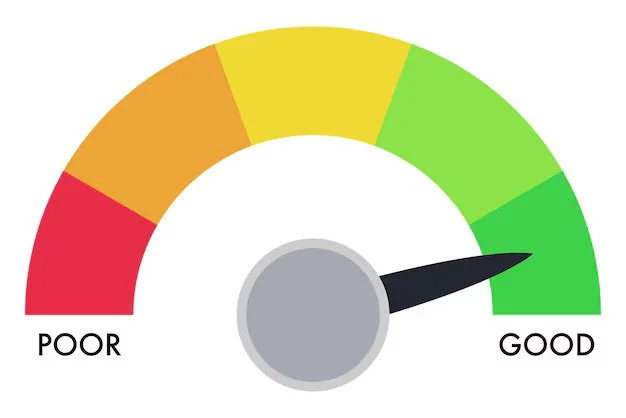
Every writer has one of these meters, he says, and when we read our work and think, “Hey, you know, this is pretty dang good!” the needle moves to the positive end of the gauge.
But we can also feel instinctively when that needle starts to drop to the negative end, when the energy or interest in the story starts to fade.
The work of a writer is to begin to rely, more and more, on this internal meter and develop a sense of trust in what it’s telling us.
Want to start strengthening your own internal meter? Here’s the process I’ve found works best for me, which I’ve inelegantly titled, “Squiggles and Check Marks.”
Let your work sit for a while.
Leave your piece alone for at least a few days (or even weeks, if you have the luxury of time).
Print out your piece.
This intensifies your sense of distance from the work, and also makes it hard to start immediately line-editing, which you might do if you were reading it in a Word doc on your computer.
Bonus points: Before you print out the piece, change the font and make a small adjustment to the margins. It will surprise you how much this allows you to see your piece differently.
Go to a coffee shop, and read through the piece as if you were a reader and not the author.
Note: Reading through your own work can kick up a lot of self-criticism, so I recommend, before doing this, trying out some gentle, calming breathing exercises.
I’ve also been known to have a wee glass of wine during my read-through to help me relax during this process (although obviously, I’m not recommending you do this at 10 in the morning).
While you read, make only two kinds of marks on your story in the margins.
Check marks: when you feel the energy of the piece working
Squiggle mark: when you start to feel the energy of the piece dropping.
Don’t stop to try to figure out why your meter is dipping, just keep moving on until you get to the end of the story.
Take a walk and think about what you discovered in this process.
What parts of your story do you feel are genuinely working?
Where did you feel the energy drop, and was there any pattern to those sections?
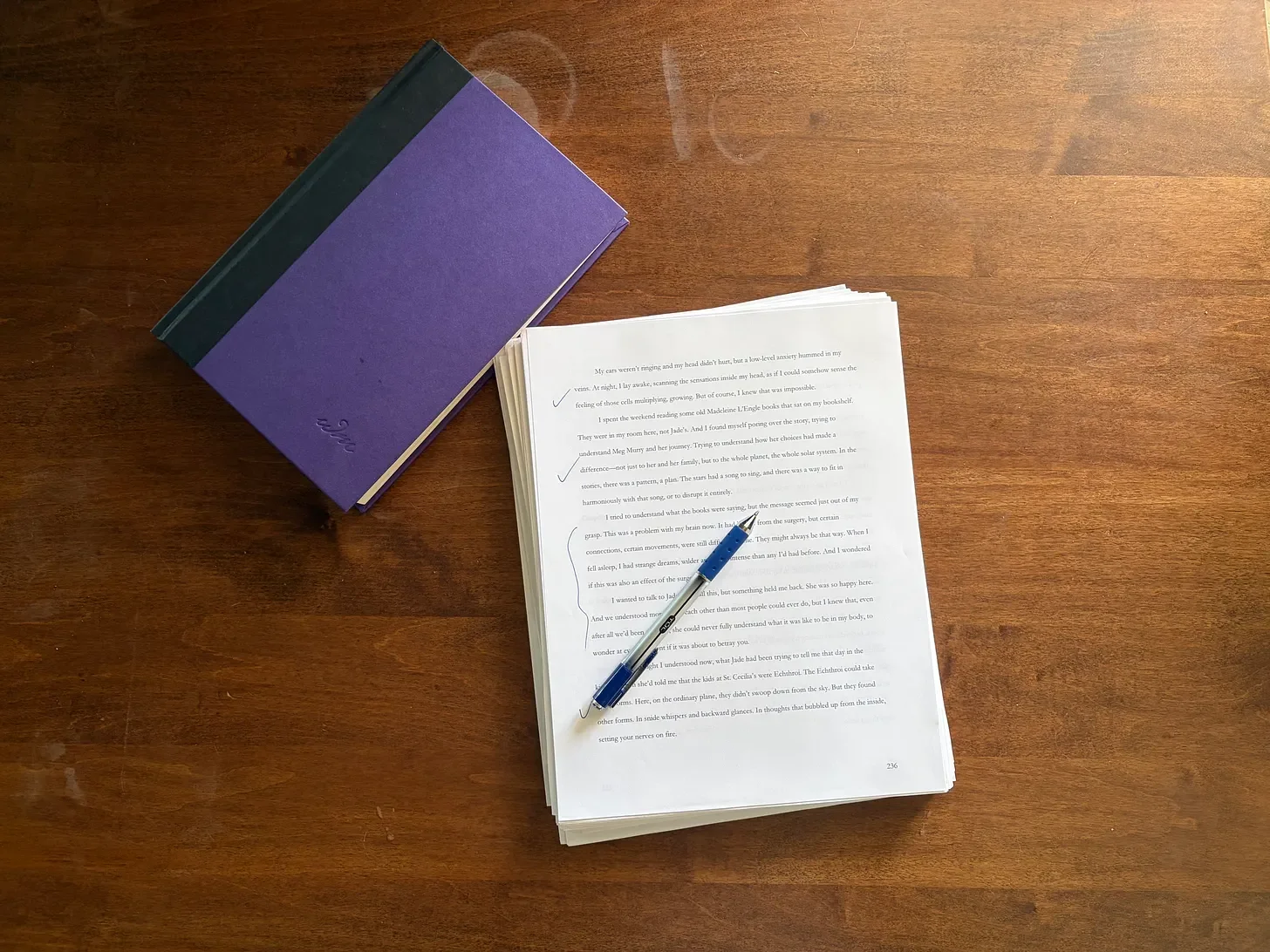
When I was working on my novel After Image, I did this exercise, and I realized that all the places I’d put squiggly marks in the manuscript marked long sections of backstory.
Those sections had felt extremely important when I was developing the characters and story, but now, narratively, I could see they were slow and boring.
What I needed to do, I realized, was to either make those sections more dynamic—by shifting them into active, present-day scenes or fully-realized flashbacks—or cutting/compressing the parts that were less important.
That breakthrough helped me make my story tighter and more pace-y, and I was able to come to that realization on my own, without the input of an editor.
This exercise is—most of the time—extremely helpful in getting you to develop your intuitive internal editor.
Try it out and see how it works for you!
–Jaime